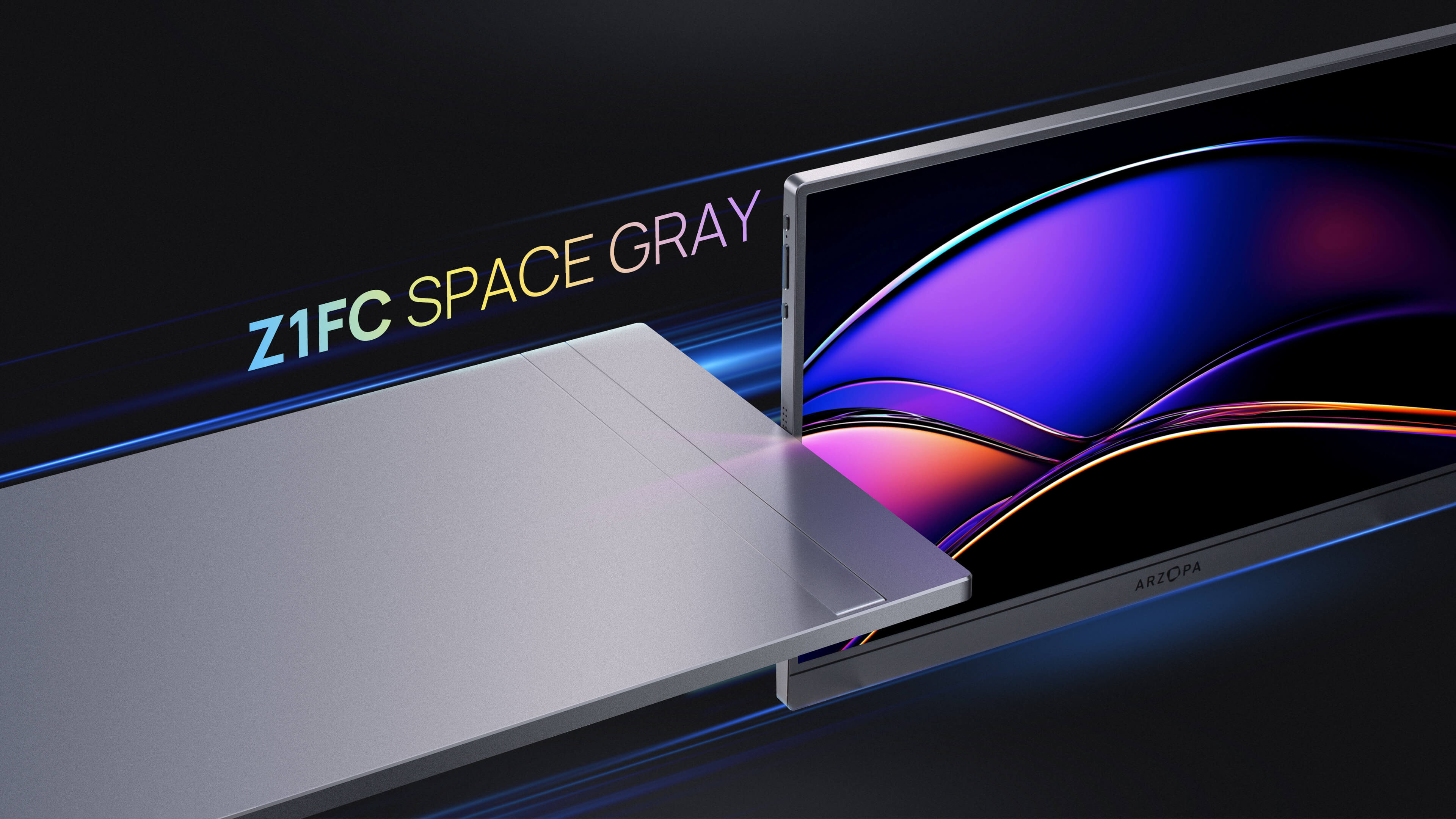

Portable monitors come in different flavors of display technology. IPS (In-Plane Switching), OLED (Organic Light Emitting Diode), and TN (Twisted Nematic)—each has its quirks. Color accuracy, response time, viewing angle—pick your poison.
But why does it matter? Look closely and you’ll see that a choice here changes how the monitor feels for gaming, office work, or just scrolling through documents.
Some panels hold color better. Others react faster. And yes, a few make you squint less. It’s subtle, but it’s there.
Display Technologies in Portable Monitors
Portable monitors come with a handful of panel types, each shaping how the screen looks and reacts. IPS, OLED, and TN are the main players—but they’re far from identical. Differences show up in color, speed, and viewing angles. Some panels handle motion better, others hold color more faithfully. You might not notice all of it at first glance, but over time, those subtle distinctions change the experience.
1. IPS (In-Plane Switching)
IPS panels are common, and for a reason. They line up liquid crystals in parallel, letting light pass through more evenly. The result? Colors that actually look right and angles that don’t betray the image.
Color accuracy stands out—IPS covers more of the color spectrum than TN or most others. That makes it useful for photo editing or design work. But wait, does that mean it’s great for gaming too? Sort of. Modern IPS panels have gotten faster, but they still usually trail TN in raw response time.
Viewing angles are generous. Tilt the screen, step to the side—the image holds up. And brightness shifts? Minimal. Small differences, but noticeable if you care.
Response time, though… it’s improved, yes. But not magically. You’ll get playable speeds for casual gaming, yet hardcore competitive play? TN still has the edge.
IPS panels aren’t perfect. They usually cost more than TN screens—technology like this doesn’t come cheap. And refresh rates? Many can hit high numbers now, but don’t expect them to match dedicated gaming monitors.
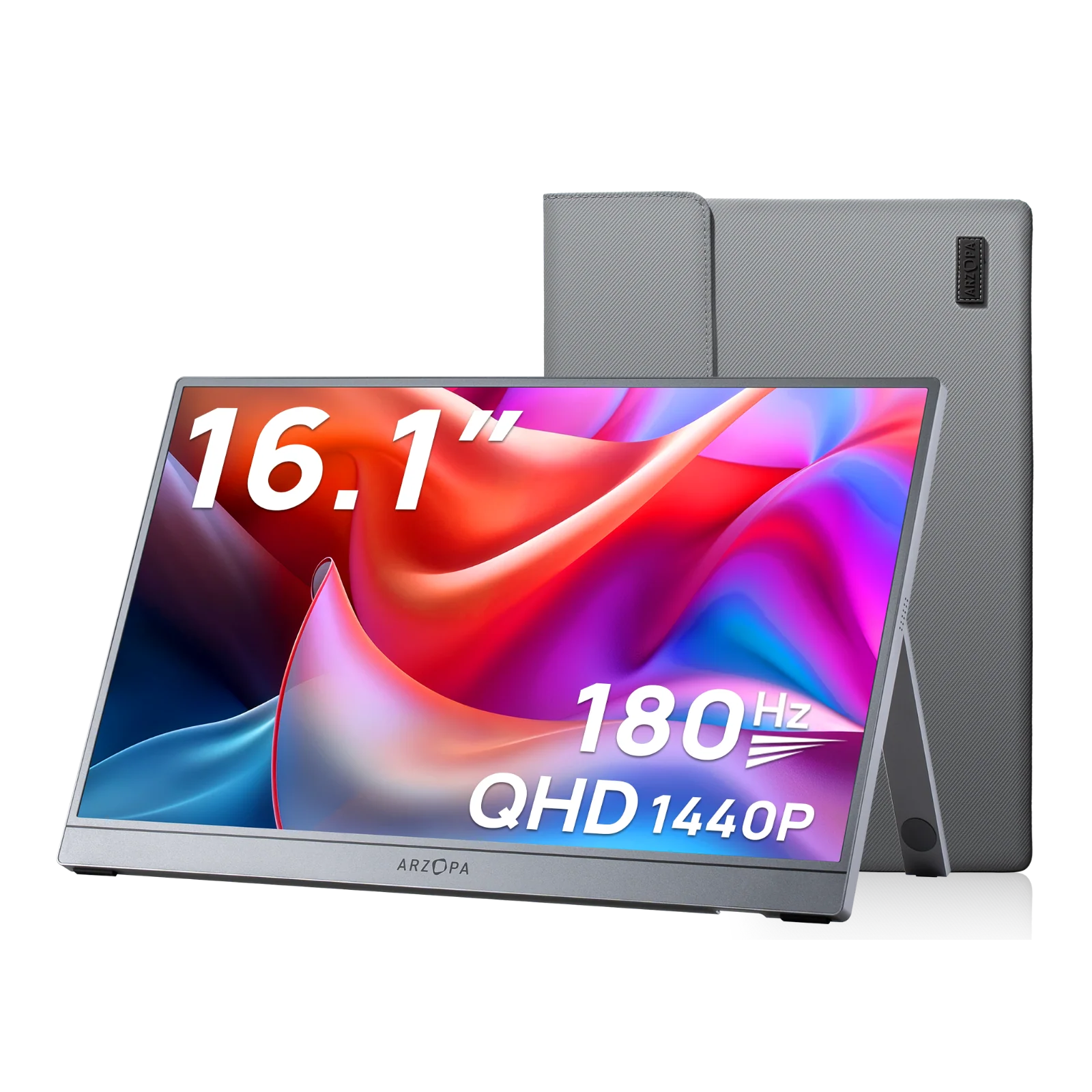
With Arzopa Z3FC Portable Gaming Monitor, see beyond the ordinary. Let the colors embrace you, the clarity astound you.
2. OLED (Organic Light Emitting Diode)
OLED panels operate on a fundamentally different principle than most other display types. Instead of relying on a backlight, each pixel generates its own light when energized. That might sound technical, but the effect is tangible: blacks appear truly black, while colors gain a vibrancy that LCDs struggle to match. The difference isn’t subtle—once you notice it, it’s hard to go back.
Contrast and color depth are where OLED really shines. Because individual pixels can switch off completely, the display can reach near-infinite contrast. That means shadow details are preserved without washing out darker areas, and highlights remain bright without bleeding into surrounding pixels. The panels themselves are thin and lightweight, making portable monitors more practical to carry around. And then there’s response time—OLEDs typically react faster than IPS or TN screens. Fast-moving content, whether it’s gaming or action video, appears crisp and fluid, with minimal ghosting or motion blur.
Yet OLED isn’t without drawbacks. Burn-in remains a risk: leaving a static image on screen for long periods can leave faint, persistent traces. Even though manufacturers have implemented mitigation techniques, the risk doesn’t fully disappear. Cost is another factor—OLED panels tend to be more expensive than their IPS or TN counterparts, which can affect the overall price of a portable monitor. Despite these limitations, the combination of contrast, speed, and portability makes OLED a compelling choice for users who prioritize visual fidelity and responsiveness.

Image credit: Reddit website
3. TN (Twisted Nematic)
TN panels are the industry’s old guard—easily the most established LCD tech we have. They work by using a twisted arrangement of liquid crystals to gate the light (it’s actually where the name comes from). It is a simple, mechanical approach to display.
Why do we still use them? Mostly, it's a matter of cost and raw speed.
If you’re looking at the budget end of portable monitors, you’re almost certainly looking at a TN panel. They are cheap to produce. But more importantly for some, they are fast—often faster than IPS when it comes to response times and refresh rates. For competitive gaming where every millisecond of lag matters, that speed is a genuine asset.
Then there is the trade-off.
The color accuracy is poor, to put it bluntly. If you tilt the screen even slightly—a common occurrence with portable setups—the image starts to wash out or invert. It’s a narrow window of usability. Because of those restrictive viewing angles, they’re effectively useless for professional design or any task where color "truth" matters. They serve a specific, narrow purpose: utility and speed over visual fidelity.
Additional Features
Touchscreen Capabilities
Almost all portable monitors nowadays feature touch functionality. Is it useful? If you're doing creative design work—the kind that requires direct pointing and even drawing on the screen—it's definitely a watershed moment. It changes the logic of interaction. But for general office work, it's more of a bonus than a necessity.
Connectivity Options
Let's look at the interfaces. USB-C is already the de facto standard. The reason is simple: one cable for everything. A single cable handles both power and signal transmission (provided your computer's interface protocol supports it), and this simplicity is almost irreplaceable for mobile work. Of course, manufacturers usually still include a Mini HDMI or a regular DisplayPort. After all, you never know what your next connected device will look like.

Image Credit: SF Cable official website
Resolution and Size
13 to 17 inches is the mainstream range; anything larger, and the portability is diluted. Resolution is a trade-off. 1080p is the baseline, 4K is the advanced level. 4K image quality is indeed incredibly detailed—you can clearly feel the disappearance of individual pixels—but there's a price to pay. It's not just the price, but also the strain it places on laptop battery life.

Conclusion
The choice of display technology in portable monitors significantly impacts their performance and suitability for different tasks. Users should consider their specific needs—such as color accuracy for creative work or fast response times for gaming—when selecting a portable monitor. With advancements in display technologies like IPS and OLED becoming more prevalent, consumers now have access to high-quality portable displays that enhance productivity and entertainment on the go. We hope this comprehensive guide has given you some insights into the portable monitors. If you have any further questions or would like to share your experiences with these innovative devices, please leave a comment below. Don't forget to share this article with your friends and colleagues who may benefit from the information. Happy browsing!