
-
📱How to Connect Your Phone to an Arzopa Portable Monitor
🔌 Wired stable · zero latencyUSB-C → USB-Cphone must support DP Alt ModeUSB-C → HDMI adapterworks on most Android phonesLightning → HDMI adapteriPhone 14 and older📶 Wireless flexible · slight latencyMiracastAndroid built-in, find "Cast" in SettingsAirPlayiPhone only, needs Apple TV or compatible displayThird-party appse.g. AirDroid Cast, cross-platform
1. What You Need Before You Start
Before plugging anything in, it helps to know what your phone actually supports. Not every USB-C port is the same — some can output video, others can't.
Does Your Phone Support Video Output?
The key thing to check is whether your Android phone supports DisplayPort Alt Mode (DP Alt Mode). This is what allows a USB-C port to send video to an external display. Most flagship phones from Samsung, Google Pixel, and OnePlus do. Budget phones often don't — in that case, you'll need an adapter or the wireless route.
For iPhones: the iPhone 15 series switched to USB-C and supports video output. All older models use Lightning, which requires Apple's official Lightning to Digital AV Adapter.
Arzopa Monitor Ports
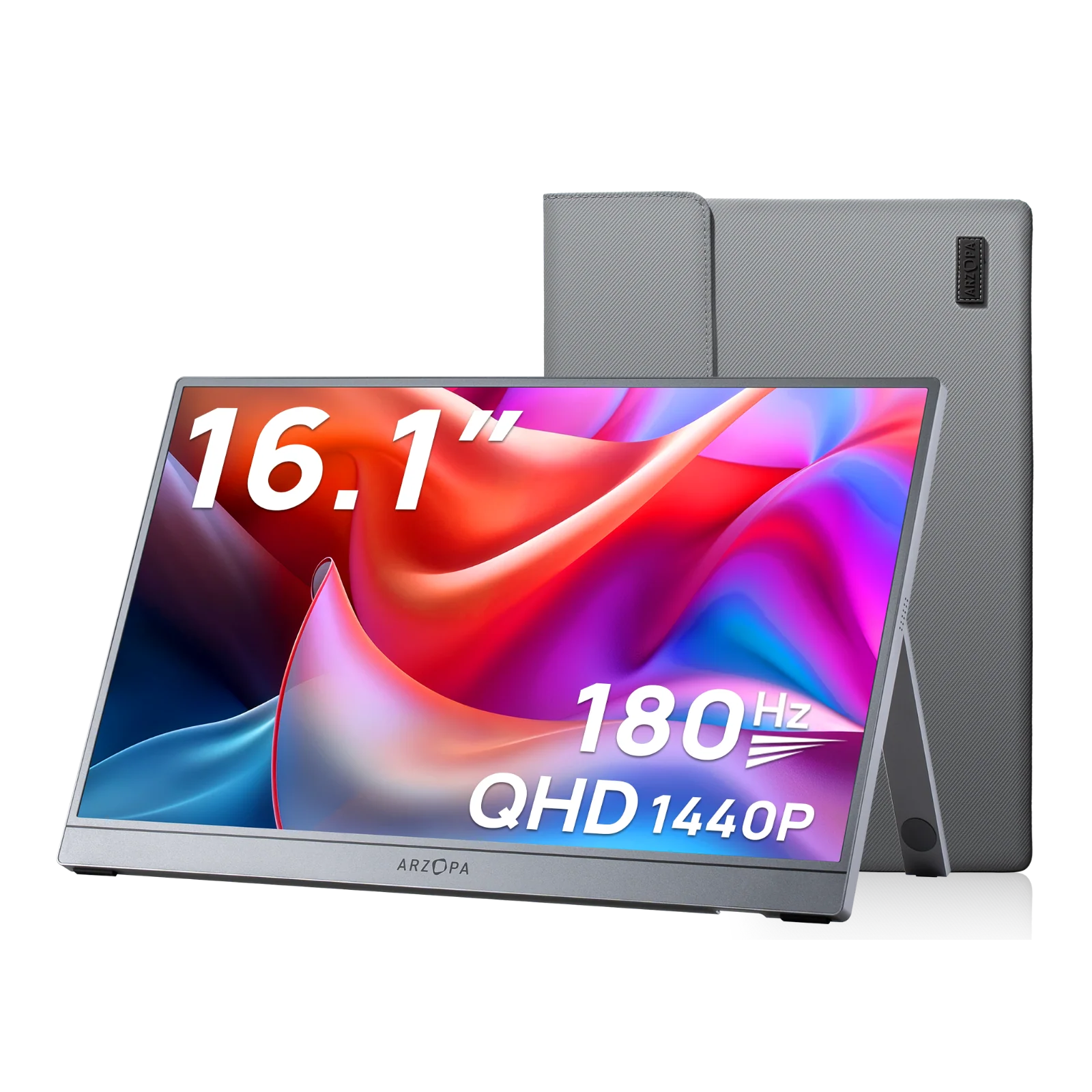
Arzopa portable monitors come with two video input ports: a full-function USB-C port and a Mini HDMI port. The USB-C port handles both power and video in a single cable when connected to a compatible device.

Quick Compatibility Reference
| Phone Type | Recommended Method | What You Need |
|---|---|---|
| Android, USB-C, supports DP Alt Mode | USB-C to USB-C | One USB-C cable |
| Android, USB-C, no DP Alt Mode | USB-C to HDMI adapter | Adapter + HDMI cable |
| iPhone 15 / 15 Pro (USB-C) | USB-C to USB-C | One USB-C cable |
| iPhone 14 and older (Lightning) | Lightning to HDMI adapter | Apple adapter + HDMI cable |
| Any Android | Miracast (wireless) | Nothing extra needed |
| Any iPhone | AirPlay or third-party app | Depends on method |
2. Wired Connection: Step-by-Step by Phone Type
Wired is always the better choice when you need reliability — no lag, no dropped signal, and full resolution output.
USB-C to USB-C (No Adapter Needed)
Best for: Android phones with DP Alt Mode support, and iPhone 15 / 15 Pro
USB-C to HDMI Adapter
Best for: Android phones that don't support DP Alt Mode
Lightning to HDMI Adapter
Best for: iPhone 14, 13, 12, and all older Lightning models
3. Wireless Connection: Screen Mirror Without a Cable
Wireless mirroring works well for video and casual browsing. The tradeoff is a small amount of latency (usually 100–300ms) — noticeable in fast-paced games, fine for everything else.
Miracast
Best for: Most Android phones — no app or extra hardware required
AirPlay
Best for: iPhone users with an Apple TV or AirPlay 2-compatible display
Third-Party Apps (AirDroid Cast / SpaceDesk)
Best for: when native protocols aren't available — works on both Android and iPhone
4. Wired vs. Wireless: Which Should You Choose?
| 🔌 Wired | 📶 Wireless | |
|---|---|---|
| Latency | Near zero | Slight (100–300ms) |
| Stability | Very stable | Depends on Wi-Fi |
| Image Quality | Full 2.5K / 4K output | Compressed, slightly reduced |
| Best For | Gaming, presentations, file work | Video, casual browsing, mobility |
| Accessories | May need adapter | Usually none |
If you're presenting slides, editing documents, or gaming — go wired. If you're watching a movie on the couch or just want a cable-free setup — wireless is perfectly fine.
5. Recommended Arzopa Portable Monitors for Phone Use


FAQ
My phone doesn't support DP Alt Mode. Can I still connect it?
Will the monitor charge my phone when connected via USB-C?
Does wireless connection affect image quality?
Can iPhone connect directly to an Arzopa monitor?
Why does my phone only mirror instead of extending the display?
Have questions about a specific phone model? Drop a comment below.