
Every photographer knows that a camera captures the moment, but the edit defines the masterpiece. However, your editing skills are only as good as the screen you are viewing them on. Relying on an inaccurate display can lead to prints that look dull or web images with strange color casts. Finding the best monitor for photo editing transforms your digital darkroom, ensuring that the colors you tweak are the colors the world sees. In 2026, the market is flooded with options, but discerning true professional tools from marketing hype requires understanding the critical specs that drive visual perfection.

Understanding Photo Editing Monitor Requirements
When searching for the best monitor for photo editing, you aren't just looking for a sharp picture; you are looking for a reference device. The primary requirement is fidelity. Standard office monitors often boost saturation and contrast to make spreadsheets look "punchy," but this is disastrous for photography. You need a neutral canvas that displays your RAW files exactly as they are.
Color accuracy is measured by how well a monitor covers specific color spaces, primarily sRGB and Adobe RGB. Most digital content lives in sRGB, but print workflows demand the wider Adobe RGB gamut. If your monitor cannot physically display a certain shade of cyan or deep red, you are essentially editing blind in those areas.
Resolution is the next critical factor. While 1080p was once standard, the best monitor for photo editing in 2026 should be at least 2K (QHD) or 4K. Higher pixel density allows you to see fine noise, sharpness artifacts, and focus issues without zooming in to 200%. Panel type also matters significantly, with IPS (In-Plane Switching) generally being preferred over TN panels due to their superior color consistency from all viewing angles.
Key Features to Look For in the Best Monitor for Photo Editing
Color Gamut Coverage
The hallmark of a professional display is its color gamut. For web-based photographers, 100% sRGB coverage is the baseline. This ensures your images look correct on most consumer devices. However, fine art photographers and those who print their work should look for 99% Adobe RGB coverage. This wider space includes more saturated colors, particularly in the green and cyan ranges, which are common in landscape photography.

Resolution and Screen Size
Screen real estate allows for efficient multitasking. A 27-inch monitor is widely considered the sweet spot for photo editing. At this size, a 4K (3840×2160) resolution offers incredible sharpness, making it easy to judge focus. However, 2.5K QHD (2560×1440) remains a highly popular choice for the best monitor for photo editing because it offers a significant upgrade over 1080p without the high GPU demands of 4K.

Panel Technology
IPS panels are the industry standard for photography because they maintain color accuracy even when viewed from the side. This is vital if you collaborate with clients sitting next to you. OLED technology is emerging as a competitor, offering perfect blacks and infinite contrast, which is amazing for HDR editing. However, high-quality IPS panels still offer the most consistent color uniformity across the entire screen surface for the price.
Connectivity and Ergonomics
Modern workflows demand modern connectivity. Look for monitors with USB-C inputs that support Power Delivery. This allows you to connect your laptop and charge it with a single cable, keeping your desk clutter-free. Ergonomics are also key; a stand that tilts, swivels, and adjusts for height prevents neck strain during marathon editing sessions.
Top 5 Monitors for Photo Editing in 2026
1. Arzopa Z1C Portable Monitor (Recommended for Mobile Workflow)
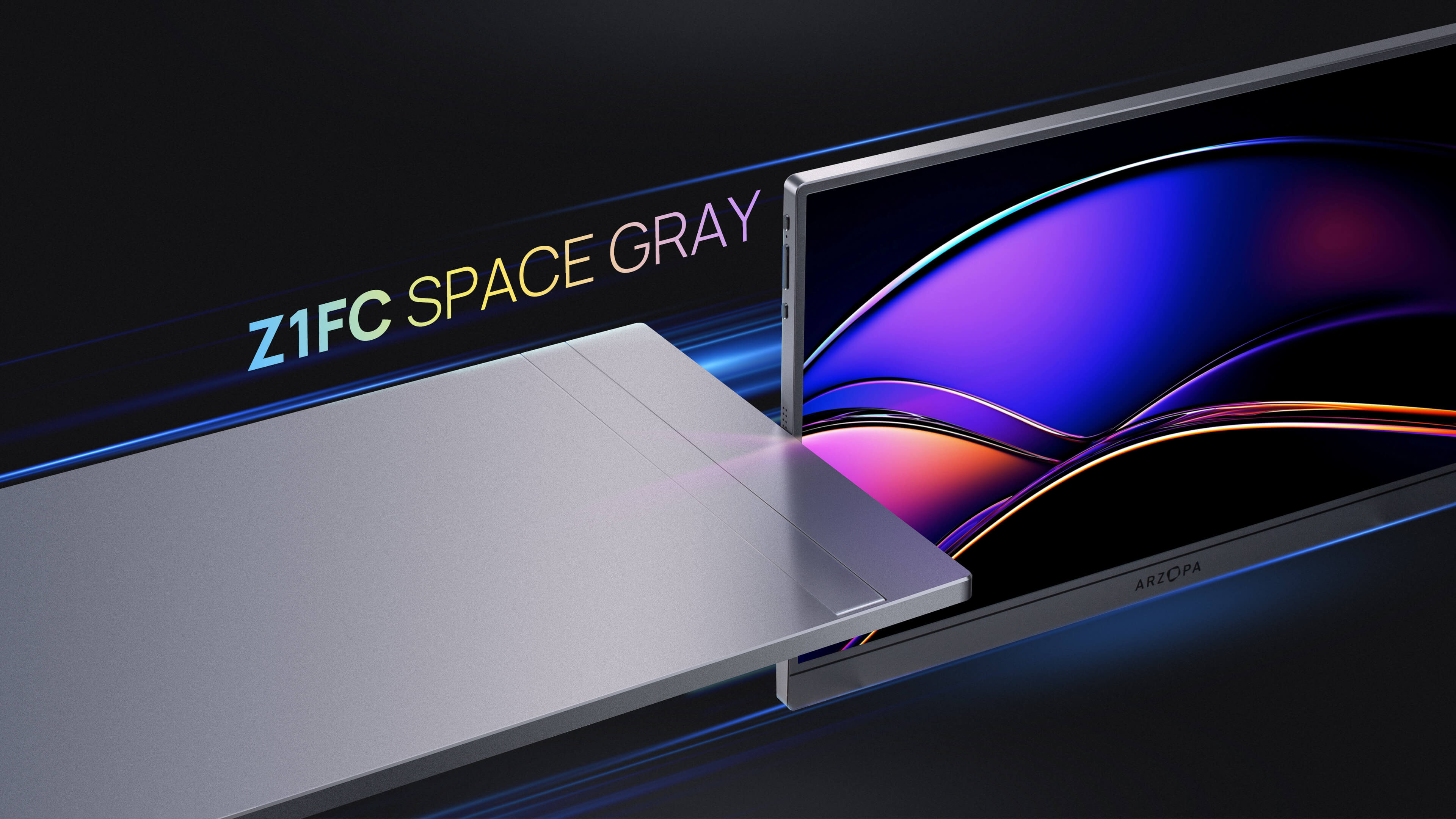
For the photographer on the go, the definition of the best monitor for photo editing has shifted toward portability without compromising quality. The Arzopa Z1C is a game-changer for location shoots and travel photography.

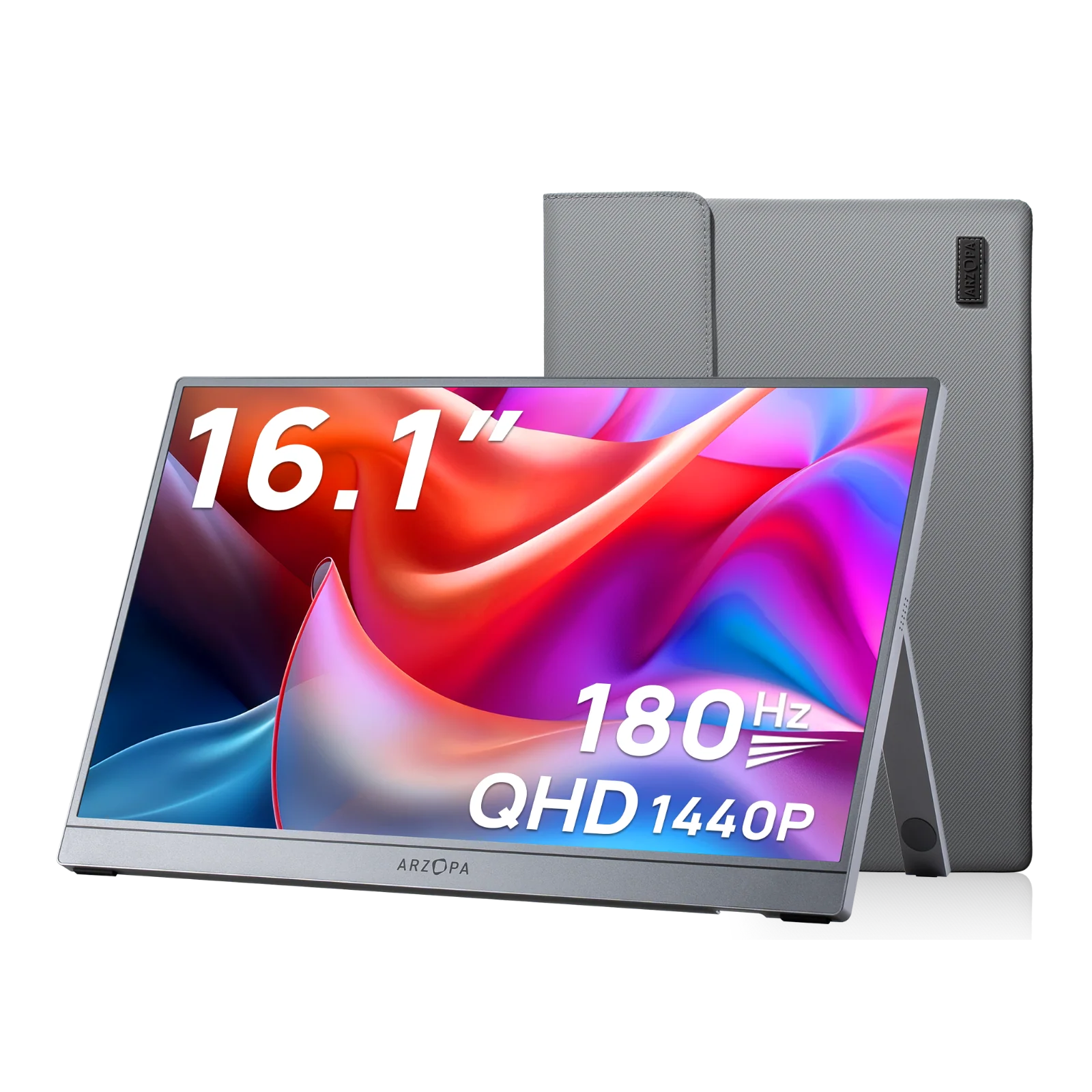
This 16.1-inch portable display features a stunning 100% sRGB IPS panel, providing the crisp density needed to check critical focus in the field. Arzopa Z1C is only 0.3-inch slim, combining a professional aesthetic with long-lasting durability. It ensures that you can scroll through thousands of photos in Lightroom feels incredibly smooth and responsive. It connects seamlessly via USB-C, serving as a perfect color-accurate second screen for your MacBook or laptop.
Key Advantages for Photographers:
- Pro-Level Color Accuracy:: Features a 100% sRGB IPS panel, delivering vivid, true-to-life colors for creative design, photo editing, and immersive media.
- Versatile Multi-Tasking: The ultimate 16.1" second screen to boost your productivity—perfect for coding, spreadsheets, and seamless office workflows.
- Premium Aluminum Build: A sleek, high-grade aluminum body that’s only 0.3-inch slim, combining a professional aesthetic with long-lasting durability.
- Universal Device Link: Instant plug-and-play support via USB-C or HDMI for MacBook, PC, smartphones, and gaming consoles like PS5 and Steam Deck.
Learn more about this portable solution: Arzopa Z1C Portable Monitor
Expert review comparing the best monitors for photo editing in 2026.
2. BenQ SW271C (Desktop Professional)

The BenQ SW271C is often cited as a benchmark for desktop editing. It features a 27-inch 4K IPS panel with excellent uniformity. Its standout feature is 99% Adobe RGB coverage, making it ideal for print professionals. It also includes hardware calibration capabilities, allowing you to tune the monitor's internal processing chip directly for maximum accuracy.
3. ASUS ProArt PA278QV (Budget-Friendly)

Not every photographer has thousands to spend. The ASUS ProArt PA278QV is a fantastic entry-level option that punches above its weight. It offers a 27-inch 2K (2560×1440) IPS display with 100% sRGB and 100% Rec. 709 color space coverage. It comes factory calibrated with a Delta E < 2 accuracy, meaning you can trust the colors right out of the box.
4. Dell UltraSharp U2724D (All-Rounder)

Dell's UltraSharp series is legendary in corporate and creative offices for a reason. The U2724D is a reliable workhorse featuring a 27-inch QHD IPS Black panel, which offers deeper blacks than standard IPS screens. It doubles as a connectivity hub with extensive USB-C and Thunderbolt options, making it the center of a tidy desk setup.
5. LG 27UP850 (4K Versatility)

The LG 27UP850 is a versatile 4K monitor that supports modern creative demands. It covers 95% of the DCI-P3 gamut, making it suitable for hybrid shooters who do both video and photo editing. It supports VESA DisplayHDR 400, giving you a taste of high dynamic range editing, and includes USB-C charging for your laptop.
Portable vs. Desktop Monitors: Which is Right for You?
Choosing the best monitor for photo editing depends heavily on your lifestyle. Desktop monitors like the BenQ or Dell offer stability and large screens for a fixed studio. However, the modern photographer is often nomadic. This is where portable monitors like the Arzopa Z1C shine. They allow you to extend your workspace anywhere—from a coffee shop to a hotel room—ensuring you don't lose productivity while traveling.

A dual-monitor setup using a laptop and a portable screen often provides the best of both worlds. You can keep your image fullscreen on the portable monitor while your editing tools and file browser remain on your laptop screen. This declutters your view and helps you focus entirely on the image aesthetics.
Monitor Calibration: Essential for Accurate Colors
Even the most expensive monitor will drift over time. Calibration is the process of aligning your monitor's output with industry standards. While factory calibration is a great starting point, serious editors should invest in a colorimeter. This hardware device hangs over your screen and adjusts the color profile to account for your room's ambient lighting and the panel's aging.
For most users, software calibration (adjusting the graphics card output) is sufficient. However, high-end monitors support hardware calibration, which adjusts the monitor's internal Look-Up Table (LUT) for superior results. It is recommended to recalibrate your display at least once a month to ensure consistency across your projects.
Essential guide on selecting monitors with proper color accuracy for professional photo editing.
Budget Considerations
When budgeting for the best monitor for photo editing, prices vary wildly. Entry-level options ($200-$400) like the ASUS ProArt are excellent for sRGB web work. Mid-range monitors ($400-$800) often introduce 4K resolution and better uniformity. Professional tier displays ($800+) from brands like Eizo or high-end BenQ models offer hardware calibration, hood accessories, and absolute Adobe RGB reliability.
Interestingly, portable options like the Arzopa Z1C sit in a very affordable price bracket while offering professional-grade resolution and refresh rates, providing exceptional value for money as a secondary reference display.
Dual Monitor Setup: Pro Tips for Photo Editing Workflow
Setting up a second screen for photo editing is more than just plugging in another display; it is about strategically organizing your workspace to maximize efficiency. Whether you use a full-sized desktop monitor or a portable companion like the Arzopa Z1C, a dual-screen setup can dramatically speed up your workflow and reduce eye fatigue.
Dual monitor setups allow photographers to separate editing tools from the main image view.
Screen Layout Strategy: Image-Centric Approach
The most common and effective layout is dedicating one screen entirely to your photo at full size. Use your primary monitor (ideally the one with the best color accuracy) to display the image you are editing. Your secondary display holds all the panels—Lightroom's Develop module controls, Photoshop's layers and adjustments, or Capture One's tool tabs. This separation prevents cluttered interfaces from obscuring your actual work.
Reference Display Workflow
Advanced photographers often use a second monitor as a reference screen. Keep your original or a before version on one display while editing on the other. This side-by-side comparison is invaluable for judging subtle tonal shifts and ensures you are not overprocessing. It is especially useful when batch editing a series where consistency is critical, such as wedding or product photography.
Histogram and Metadata on Secondary Screen
Move your histogram, scopes, and file browser to the second monitor. This keeps critical technical information visible at all times without covering your canvas. When culling through hundreds of photos, having thumbnails on one screen and the full preview on the other accelerates decision-making dramatically.
Color-Critical Consideration
Not all monitors are equal. If your secondary display is not color-calibrated, avoid using it to judge final colors. Instead, reserve it for non-critical tasks like tool panels, email, or web references. Your best monitor for photo editing should always display the primary image for color decisions.
Portable Second Screen Advantages
Portable monitors like the Arzopa Z1C offer unique flexibility. When working on location or traveling, you can set up a professional dual-screen workflow in a hotel room or café. Simply connect via USB-C to your laptop, and you instantly have dedicated space for palettes and previews. The lightweight form factor means you are not sacrificing portability for productivity.
FAQs
For serious photo editing, a minimum of 2.5K QHD (2560×1440) is recommended to see adequate detail. However, 4K is ideal if your budget allows, as it lets you view 8-megapixel images at 1:1 pixel ratio and assess sharpness more accurately for large prints.
Yes, if you primarily publish images online or on social media, 100% sRGB is the standard. However, if you print high-end art or work for magazines, you will benefit from a monitor that covers the wider Adobe RGB space to see all printable colors.
Yes. While factory calibration is helpful, it is done in a factory environment that differs from your lighting. To truly get the best monitor for photo editing performance, you should calibrate it for your specific working environment.
Conclusion
Finding the best monitor for photo editing is an investment in your art. Whether you choose a high-end desktop panel for your studio or a versatile portable solution, the goal is trust in what you see. For the modern creator who values flexibility without sacrificing pixel density, the Arzopa Z1C stands out as a superb companion. By combining QHD resolution with portability, it ensures your workflow remains professional, no matter where your photography takes you. Visit Arzopa to explore how portable displays can revolutionize your editing process.