Not every portable monitor is right for every buyer. Finding the perfect second screen depends entirely on your daily workflow, budget, and travel habits.
The market for portable monitors has expanded rapidly, and Arzopa has emerged as a prominent manufacturer with a highly diversified lineup. However, navigating their catalog can be confusing for the average consumer. A display built for competitive gaming has vastly different specifications than one designed for coding or spreadsheet analysis. Shoppers often overpay for features they do not need, or conversely, purchase an entry-level screen that fails to meet their professional requirements.
This buyer's guide breaks down six specific Arzopa portable monitor models to help you make an informed purchasing decision. We will examine the practical benefits and inherent tradeoffs of each monitor, stripping away marketing terminology to focus strictly on hardware performance and usability.
Methodology: How We Compared These Models
Recommendations in this guide are based on a factual analysis of critical display specifications: screen size, resolution, refresh rate, color coverage (sRGB percentage), peak brightness, response time, and the physical form factor. By weighing these hardware metrics against intended use cases, we identified which demographics are best served by each specific model.
Quick Picks
- Best portable monitor for High-End Gaming: Z3FC (180Hz, 1440p)
- Best portable monitor for Creators: Z1RC (2.5K, 16:10, 123% sRGB)
- Best second screen for Coding & Productivity: Z1RC (extra vertical space for documents and code)
- Best Value / Everyday Office: Z1C (1080p, 100% sRGB)
- Best monitor for Heavy Multitasking: E1 (Dual 15.6-inch screens)
- Best Large-Screen Pick: A1M (17.3-inch large display)
Comparison Table: Specifications at a Glance
| Model | Size | Resolution | Refresh Rate | Color Coverage | Brightness | Best For | Main Tradeoff |
|---|---|---|---|---|---|---|---|
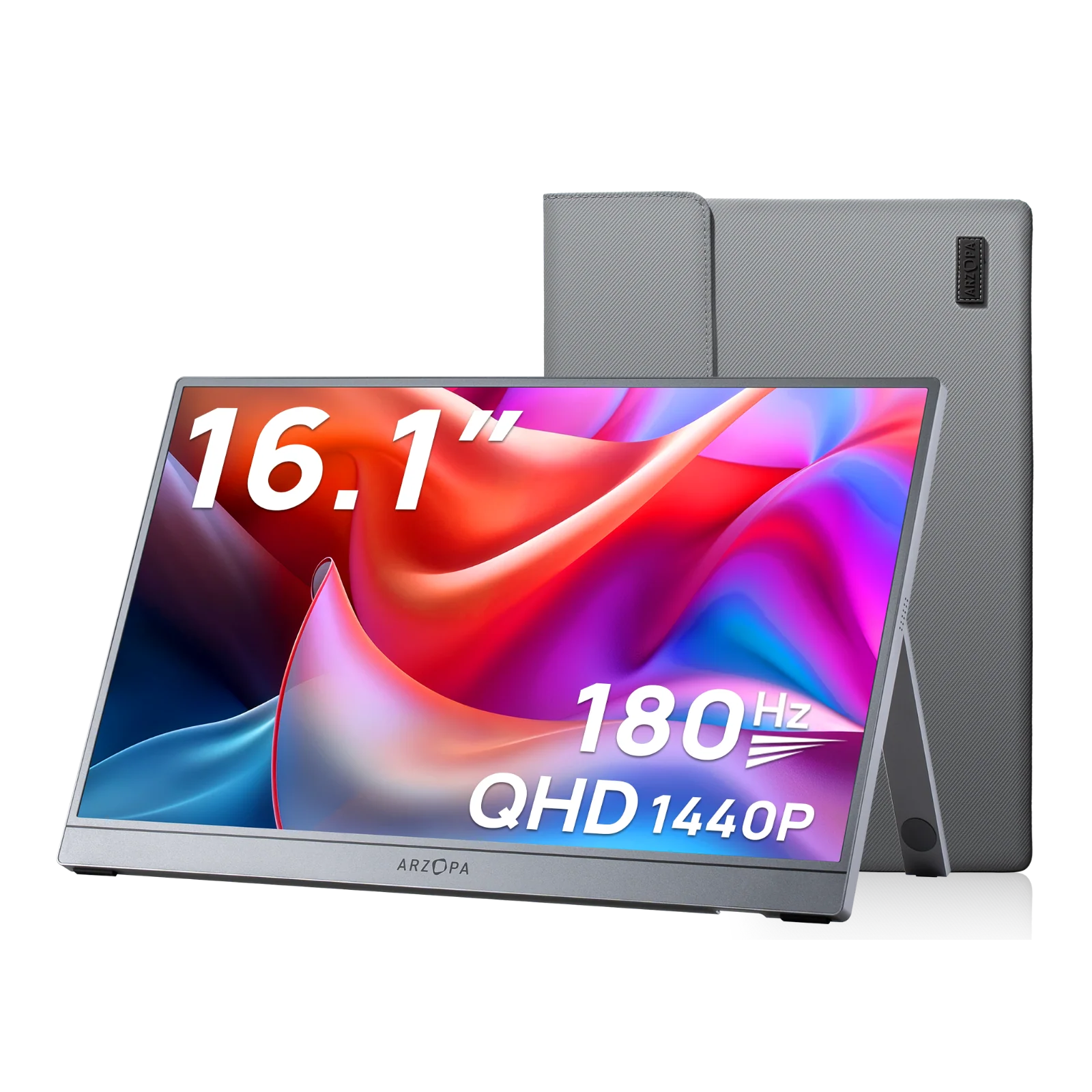
| Z3FC | 16.1" IPS (16:9) | 2560 x 1440 | 180Hz | 107% sRGB | 400 nits | Gaming, creative work | Premium pricing, overkill for basic office tasks |
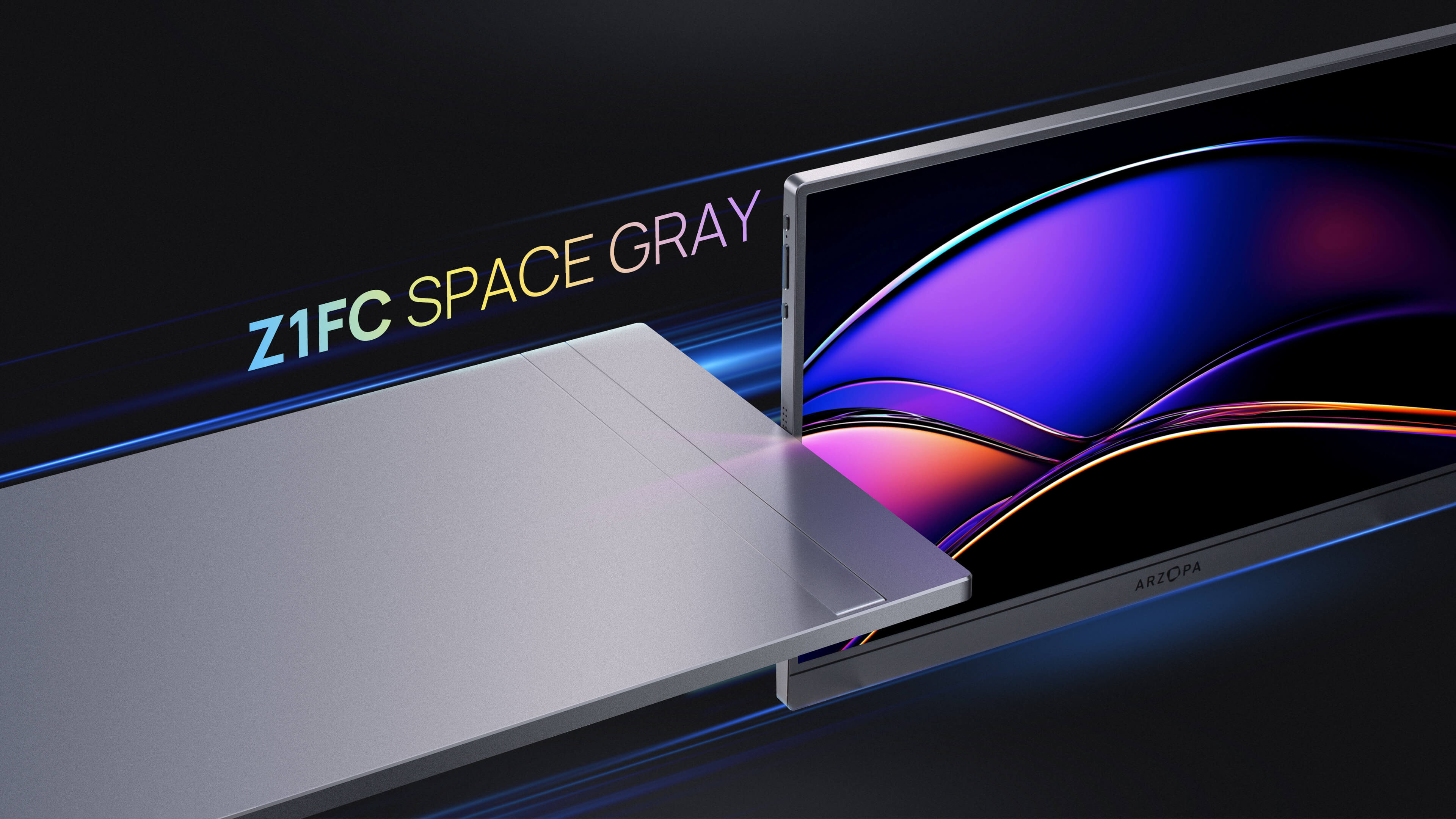
| Z1FC | 16.1" IPS (16:9) | 1920 x 1080 | 144Hz | 106% sRGB | 300 nits | Entry-level gaming | 1080p resolution lacks the sharpness of 2.5K panels |
| Z1RC | 16.0" IPS (16:10) | 2560 x 1600 | 60Hz | 123% sRGB | 350 nits | Coding, design, finance | 60Hz refresh rate is not ideal for fast-paced gaming |
| Z1C | 16.1" IPS (16:9) | 1920 x 1080 | 60Hz | 100% sRGB | 300 nits | Travel, general office | Basic specifications with no premium features |
| A1M | 17.3" IPS (16:9) | 1920 x 1080 | 60Hz | 103% sRGB | 300 nits | Large-screen viewing | Bulky for frequent travel, lower pixel density (PPI) |
| E1 | Dual 15.6" IPS | 1920 x 1080 | 60Hz | 100% sRGB | 300 nits | Heavy multitasking | Heavy footprint, requires substantial desk space |
Individual Model Reviews
Arzopa Z3FC: The High-Performance Flagship
For buyers who refuse to compromise on visual fidelity, the Z3FC serves as the ultimate 180Hz flagship. Combining a sharp 2560x1440 (2.5K) resolution with a blistering 180Hz refresh rate and a rapid 9ms response time, this monitor caters heavily to hardcore gamers and professionals who require fluid motion. Additionally, its 400-nit peak brightness allows it to perform well in brightly lit environments, such as coffee shops or near windows.
Pros:
- Excellent 2.5K resolution paired with a 180Hz refresh rate.
- Class-leading 400 nits of brightness.
- 107% sRGB coverage ensures vibrant, accurate colors for creative work.
Cons:
- Higher price point makes it an inefficient purchase for users only working with text documents.
Best for: Hardcore gamers, creative professionals, and high-end mobile office setups.
Arzopa Z1FC: The Entry-Level Gaming Choice
The Z1FC steps down the resolution to standard 1080p (FHD) but maintains a high 144Hz refresh rate. This positioning makes it a highly practical option for students or entry-level gamers who want smooth gameplay without paying the premium required for a 2.5K panel. With 106% sRGB color coverage, it still delivers excellent color accuracy for light creative tasks or media consumption.
Pros:
- Smooth 144Hz refresh rate at a more accessible price.
- Strong color performance (106% sRGB).
Cons:
- 1080p resolution on a 16.1-inch screen looks noticeably less crisp than 1440p alternatives.
- Slightly slower 13ms response time compared to the Z3FC.
Best for: Students, budget-conscious gamers, and users wanting a fluid display for everyday tasks.
Arzopa Z1RC: The Productivity & Coding Studio
For most professionals, the Z1RC is the smartest investment on this list. Unlike the other 16:9 models, the Z1RC features a 16:10 aspect ratio at a 2560x1600 resolution. This extra vertical space is a massive advantage for reading code, analyzing financial spreadsheets, and editing documents. Furthermore, its impressive 123% sRGB color coverage makes it highly viable for serious photo and video editing.
Pros:
- 16:10 aspect ratio provides more vertical screen real estate.
- Incredible 123% sRGB color gamut for professional design work.
- Bright 350-nit panel.
Cons:
- Standard 60Hz refresh rate and a slow 26ms response time make it a poor choice for gaming.
Best for: Programmers, data analysts, designers, and general productivity.
Arzopa Z1C: The Classic Office All-Rounder
If you simply need a reliable, standard secondary screen for travel and remote work, the Z1C represents the classic office baseline. It provides a 16.1-inch 1080p display with a standard 60Hz refresh rate. It lacks the flashy specifications of the other models, but it delivers exactly what digital nomads and business travelers need: a balanced price-to-performance ratio and 100% sRGB color accuracy for general use.
Pros:
- Highly affordable and cost-effective.
- Solid 100% sRGB coverage ensures colors do not look washed out.
- Perfectly adequate 10ms response time for general use.
Cons:
- Basic 60Hz/1080p specs offer nothing premium.
Best for: Work from home, frequent travelers, and users needing a basic productivity extension.
Arzopa A1M: The Desktop Replacement
The A1M is defined entirely by its size. At 17.3 inches, it provides a significantly larger viewing area, making it feel much closer to a traditional desktop monitor. This makes it an excellent choice for users who want to watch movies, set up a semi-permanent home office, or simply prefer larger text and UI elements. However, stretching 1080p resolution across a 17.3-inch panel results in a lower pixel density.
Pros:
- Massive 17.3-inch display provides an immersive, desktop-like experience.
- Good color reproduction with 103% sRGB.
Cons:
- Lower Pixels-Per-Inch (PPI) means text is not as sharp.
- The large footprint makes it significantly harder to fit into standard laptop bags.
Best for: Movie lovers, older users needing larger interfaces, and static desk setups.
Arzopa E1: The Dual-Screen Workstation
The E1 is a highly specialized piece of hardware consisting of dual 15.6-inch 1080p IPS screens. It is built for a vertical dual-screen workflow. This model makes sense if you are a financial trader monitoring multiple charts, a researcher referencing multiple PDFs simultaneously, or a heavy multitasker. The primary tradeoff is the physical bulk and desk space required to deploy it.
Pros:
- Unmatched productivity potential with a folding, vertical dual-screen setup.
- 100% sRGB color accuracy across both panels.
Cons:
- Heavy and bulky compared to single-panel monitors.
- 25ms response time is sluggish for anything other than static office work.
Best for: Financial traders, researchers, and heavy spreadsheet users.
Which Arzopa Portable Monitor Should You Buy?

Matching the hardware to your lifestyle is the most critical step. Here is a summary of how these monitors align with specific user profiles:
- If you are a programmer or writer: Choose the Z1RC. The 16:10 aspect ratio allows you to see more lines of code or text without scrolling, which dramatically improves efficiency.
- If you are a competitive gamer: Choose the Z3FC. The 180Hz refresh rate and 9ms response time will keep up with fast-paced shooters, while the 2.5K resolution ensures modern games look sharp.
- If you travel constantly for business: Choose the Z1C. It is thin, light, covers the basics perfectly, and will not break the bank if it gets damaged in transit.
- If you do professional photo/video editing: Choose the Z1RC or the Z3FC. The Z1RC offers superior color gamut (123% sRGB), while the Z3FC offers better peak brightness (400 nits).
- If you trade stocks or analyze massive data sets: Choose the E1. Having two screens physically attached transforms a laptop into a mobile trading desk.
Frequently Asked Questions (FAQ)
1. Do I really need a high refresh rate (144Hz or 180Hz) for office work?
For standard office work, typing, and web browsing, a 60Hz monitor is perfectly adequate. High refresh rates like those found on the Z3FC and Z1FC are primarily designed to reduce motion blur in gaming. However, some users do prefer high refresh rates for general use simply because scrolling through web pages and moving the mouse cursor feels noticeably smoother.
2. Is 2.5K resolution worth the upgrade on a 16-inch screen?
Yes, if you deal with fine details. Upgrading from 1080p to 2.5K (1440p or 1600p) on a 16-inch monitor significantly increases the pixel density. This results in much sharper text, which reduces eye strain over long periods of reading or coding. If you only use the monitor for watching videos or light gaming, 1080p is usually sufficient.
3. Can I connect these monitors to an Apple MacBook?
Yes. All of these monitors support USB-C connections. If your MacBook has a Thunderbolt/USB-C port that supports DisplayPort Alt Mode (which all modern MacBooks do), you can connect and power the monitor using a single USB-C cable.
4. Will the A1M fit in my standard laptop backpack?
The A1M is 17.3 inches, which means it will not fit into backpacks designed specifically for 13-inch or 15-inch laptops. You will need a larger bag explicitly designed to hold 17-inch workstation laptops if you plan to travel frequently with the A1M.
5. Do I need external power for these monitors?
In most cases, a single USB-C cable from your laptop provides both the video signal and the necessary power. However, if you are connecting via HDMI, or if you are using a device with low power output (like a Nintendo Switch or an older smartphone), you will need to plug the monitor into an external power source using the secondary USB-C power port.
6. Why is the response time on the Z1RC and E1 so high (25-26ms)?
These monitors are optimized for productivity, color accuracy, and viewing angles (IPS technology) rather than speed. A 25ms response time is entirely unnoticeable when typing, reading, or watching videos. It only becomes a detriment if you attempt to play fast-paced, competitive video games where split-second reaction times are required.
Conclusion
Selecting the right portable monitor requires an honest assessment of your daily tasks. If you prioritize text clarity and productivity, the 16:10 aspect ratio of the Z1RC is an outstanding choice. If gaming is a priority, investing in the high refresh rates of the Z3FC or Z1FC makes sense. For general, budget-friendly portability, the Z1C remains a safe and practical option. By aligning your purchase with the specifications that actually impact your workflow, you can ensure your investment yields tangible improvements in your daily computing experience.