
Need an extra screen but don't want to spend hundreds on a new monitor? With 76% of remote workers using multiple displays for productivity, the demand for affordable screen solutions has never been higher. The good news: you can use a laptop as a monitor for your desktop PC, gaming console, or another laptop using several proven methods.
Whether you want to use laptop screen as external monitor for Xbox gaming, create a dual-screen setup with an old laptop, or extend your desktop workspace, this comprehensive guide covers all methods—from wireless display to HDMI capture cards. Let's explore how to transform your laptop into a functional secondary display.
Understanding the Basics: Can You Really Use a Laptop as a Monitor?
The short answer is yes, but with important limitations. Unlike traditional monitors, laptop screens aren't designed to accept video input directly. Here's why:
Why Laptop HDMI Ports Don't Work as Inputs
Critical Fact: 99% of laptop HDMI ports are output-only, meaning they send video signals OUT to external displays but cannot receive signals IN from other devices.
Why This Matters:
- You cannot simply connect an HDMI cable from your Xbox to your laptop and expect it to work
- Laptop displays use internal connections (LVDS, eDP) that are incompatible with standard HDMI input
- Special hardware or software solutions are required to make your laptop function as a monitor
- Available Methods to Use Laptop as Monitor
Fortunately, there are three proven approaches:
- Wireless Display (Software): Use built-in Windows features or third-party apps
- HDMI Capture Card (Hardware): Convert external video signals into USB data your laptop can process
- Hybrid Solutions: Combine software and minimal hardware for specific use cases
Each method has different performance characteristics, costs, and ideal use cases—which we'll explore in detail below.
Method 1: Wireless Display - Using Built-in Windows Features

The easiest way to use laptop as second monitor is through Windows' built-in wireless display feature called "Projecting to this PC". This method is completely free and requires no additional hardware.
Requirements for Wireless Display
- Both devices running Windows 10/11
- Both connected to the same WiFi network
- Miracast support (most laptops from 2015+ have this)
- No special cables or hardware needed
On the Laptop (Secondary Display):
- Open Settings (Windows Key + I)
- Navigate to System > Projecting to this PC
- Change the first dropdown to "Available everywhere" or "Available everywhere on secure networks"
- Set "Ask to project to this PC" to "Every time a connection is requested" (⚠recommended for security)
Optional: Set "Require PIN for pairing" for added security
On the Primary Computer (Desktop/Laptop):
- Press Windows Key + K to open the Connect sidebar
- Click "Connect to a wireless display"
- Select your secondary laptop from the list
- Accept the connection request on the secondary laptop
- Choose display mode: Duplicate or Extend
Performance Expectations
Pros:
- No additional cost
- Easy setup
- Works across different laptop brands
- No cables required
Cons:
- 20-100ms latency (not suitable for fast-paced gaming)
- Requires strong WiFi connection
- Image quality depends on network bandwidth
- Can drain battery quickly on both devices
✨Best For: Office productivity, web browsing, document editing, video streaming (not gaming)
Method 2: HDMI Capture Card - The Hardware Solution

To use laptop as monitor for xbox or PS4/PS5, you need an HDMI capture card. This hardware device converts HDMI signals into USB data that your laptop can display through software.
How HDMI Capture Cards Work
- Console/PC HDMI Output → Capture Card HDMI Input
- Capture Card Processing → Converts video to USB data stream
- USB Connection → Laptop receives video as webcam/capture device
- Capture Software → Displays video on laptop screen
Recommended Capture Cards
|
Capture Card |
Price |
Resolution |
Latency |
Best For |
|
Elgato HD60 S+ |
$179 |
1080p 60fps |
5-15ms |
Professional gaming |
|
AVerMedia Live Gamer Portable 2 Plus |
$149 |
1080p 60fps |
10-20ms |
Console gaming |
|
Mirabox 4K Capture Card |
$25-40 |
1080p 60fps |
25-40ms |
Budget option |
|
ClonerAlliance Box Pro |
$199 |
4K 30fps |
15-25ms |
High resolution |
USB 3.0 Required: USB 2.0 ports cannot handle the bandwidth needed for smooth 1080p video.
Complete Setup Guide: Xbox/PS4 to Laptop
What You Need:
- HDMI capture card
- HDMI cable (usually included)
- Laptop with USB 3.0 port
- Capture software (OBS Studio is free)
Step-by-Step Instructions:
- 1. Connect Console to Capture Card:
Plug HDMI cable from Xbox/PS4 HDMI output into capture card HDMI IN port
- 2. Connect Capture Card to Laptop:
Plug capture card's USB cable into laptop's USB 3.0 port (usually blue)
- 3. Install Capture Software:
Download OBS Studio (free) from . Or use manufacturer's software (Elgato Game Capture, etc.)
- 4. Configure Display:
- Open OBS Studio
- Click "+" under Sources
- Select "Video Capture Device"
- Choose your capture card from dropdown
- Right-click preview window → Fullscreen Projector → Select laptop screen
- 5. Optimize Settings:
- Set resolution to 1920x1080
- l Enable "Use Buffering" for smoother playback
- Adjust audio sync if needed (usually -50 to -150ms)
Performance Analysis
Budget Cards ($25-50):
- Latency: 25-50ms
- Acceptable for single-player games
- Noticeable delay in competitive gaming
Mid-Range Cards ($100-150):
- Latency: 10-25ms
- Good for most gaming scenarios
- Solid streaming quality
Premium Cards ($150-200):
- Latency: 5-15ms
- Near-imperceptible delay
- Professional streaming features
Reality Check: Even the best capture cards add 5-15ms latency. For competitive gaming (esports, FPS games), consider a dedicated portable gaming monitor for zero-latency experience.
Method 3: Third-Party Software Solutions
Several software applications allow you to use second laptop as monitor without capture cards. These work by streaming your desktop over WiFi or USB.
Top Software Options
1. Spacedesk (FREE)

Best For: General productivity and multi-monitor setups
Features:
- Completely free
- Works on Windows, iOS, Android
- Supports multiple secondary displays
- USB connection option for lower latency
Setup:
- Download Spacedesk server on primary PC (spacedesk.net)
- Download Spacedesk viewer on secondary laptop
- Connect both to same network
- Launch viewer, select your PC from list
Performance: 30-80ms latency over WiFi, 20-50ms over USB
2. Duet Display ($9.99)

Features:
- Low latency (20-40ms)
- USB connection for best performance
- High resolution support
- Touch input support (on touchscreen laptops)
Setup:
- Purchase and download Duet Display on both devices
- Connect via USB cable (recommended) or WiFi
- App automatically extends display
Performance: Significantly better than free options, worth the cost for daily use
3. Windows "Project to this PC" (FREE)

Already covered in Method 1—this is Microsoft's built-in wireless display solution.
Software Comparison Table
|
Software |
Cost |
Platforms |
Latency |
Connection |
|
Spacedesk |
Free |
Windows/iOS/Android |
30-80ms |
WiFi or USB |
|
Duet Display |
$9.99 |
Windows/Mac/iOS |
20-40ms |
USB or WiFi |
|
Miracast (Windows) |
Free |
Windows only |
20-100ms |
WiFi Direct |
Gaming Console Setup: Xbox and PlayStation to Laptop

Option 1: HDMI Capture Card Method
This is the most reliable method for all consoles (Xbox, PlayStation, Nintendo Switch).
Best Capture Cards for Console Gaming:
- Elgato HD60 S+: $179, 5-15ms latency, best for competitive gaming
- AVerMedia GC311: $99, 20-30ms latency, great value for casual gaming
- Mirabox Basic: $30, 30-50ms latency, budget option for single-player games
Setup (refer to Method 2 for detailed steps):
- Console HDMI → Capture card
- Capture card USB → Laptop
- OBS Studio or manufacturer software
- Fullscreen display mode
Gaming Performance:
- Single-Player Games: Excellent on all capture cards
- Casual Multiplayer: Good on mid-range cards
- Competitive Gaming: Premium cards only (or consider portable monitors)
Option 2: Remote Play Apps (Wireless, No Hardware)
Xbox Remote Play:
- Download Xbox app on Windows laptop
- Sign in with Xbox account
- Connect to same network as Xbox
- Stream games wirelessly
PlayStation Remote Play:
- Download PS Remote Play app (free)
- Sign in with PSN account
- Connect to same WiFi network as PS4/PS5
- Stream games with 10-50ms latency
Performance:
- Requires strong WiFi (5GHz recommended)
- 10-50ms latency depending on network
- Best for turn-based or casual games
Not recommended for fast-paced action games.
Why Choose Arzopa Portable Monitors Instead?
While using a laptop as a monitor works in many scenarios, there are significant limitations:
❌ Latency Issues: Even the best solutions add 5-50ms delay
❌ Software Complexity: Requires setup, troubleshooting, and maintenance
❌ Battery Drain: Using laptop as display consumes significant power
❌ Positioning Challenges: Laptop screens aren't ergonomically designed as monitors
❌ Hardware Costs: Quality capture cards cost $100-200 anyway
The Arzopa Portable Monitor Advantage
A dedicated portable monitor from Arzopa eliminates all these issues:
✅ Zero Latency: Direct HDMI connection with no processing delay
✅ Plug-and-Play: No software, drivers, or configuration needed
✅ True Portability: Slim, lightweight designs fit in laptop bags
✅ Better Ergonomics: Adjustable stands and proper monitor positioning
✅ Universal Compatibility: Works with laptops, desktops, consoles, smartphones
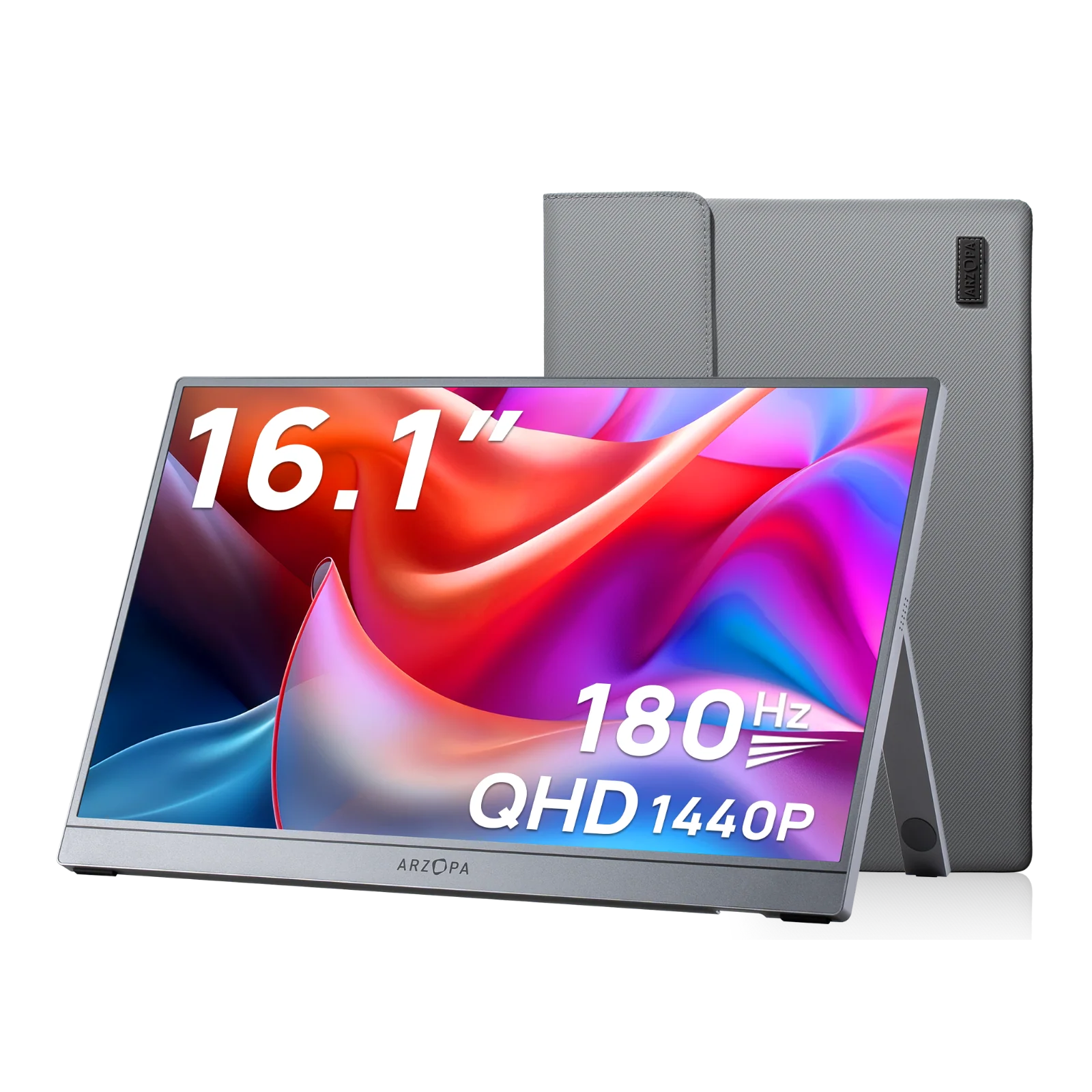
Featured: Arzopa Z3FC 16.1" 180Hz QHD Gaming Monitor
Perfect for gamers who want:
- 180Hz Refresh Rate: Ultra-smooth gameplay, 3x faster than standard 60Hz
- 2560x1440 QHD Resolution: Stunning visual clarity
- Direct HDMI Input: True zero-latency gaming on Xbox, PS5, Switch
- USB-C & HDMI Connectivity: Works with everything
- 16.1" Screen: Ideal size for gaming and productivity
Troubleshooting Common Issues
Issue 1: "No Devices Found" in Wireless Display
Solutions:
Verify both devices support Miracast: Settings > System > About > "Related settings: Projecting to this PC"
- Ensure both devices are on the same WiFi network
- Disable VPN or firewall temporarily to test
- Update network drivers on both devices
- Restart WiFi router and both computers
Issue 2: High Latency with Capture Card
Solutions:
- Confirm USB 3.0 connection (USB 2.0 is too slow)
- Close unnecessary background applications
- Enable "Low Latency Mode" in capture software
- Reduce preview resolution in capture software (process at 1080p but preview at 720p)
- Update capture card firmware and drivers
Issue 3: Poor Video Quality
Solutions:
- Increase bitrate in capture software (try 15-20 Mbps)
- Check HDMI cable quality (use high-speed HDMI 2.0 cables)
- Disable Windows battery saver mode
- Connect laptop to power adapter during use
- Adjust brightness and contrast in capture software
Issue 4: Audio Sync Problems
Solutions:
- Add audio delay in OBS: Advanced Audio Properties > Sync Offset (-50 to -150ms typical)
- Use capture card's audio passthrough if available
- Connect speakers directly to console instead of relying on laptop audio
- Test different USB ports (some ports have better audio sync)
Frequently Asked Questions
Can I use my laptop as a monitor with just an HDMI cable?
No. Laptop HDMI ports are output-only. You need either a capture card (hardware) or wireless display software.
What is the best free method to use a laptop as a second monitor?
Windows' built-in "Projecting to this PC" feature or Spacedesk software are both completely free and work well for productivity.
Can I use my laptop as a monitor for PS5?
Yes, using either an HDMI capture card (best performance) or PS Remote Play app (wireless, more latency).
How much latency is acceptable for gaming?
Under 30ms is acceptable for most games. Under 15ms is ideal for competitive gaming. Under 5ms is professional-level.
Will using my laptop as a monitor damage it?
No, there's no risk of hardware damage. However, extended use can drain battery and generate heat, so use on a flat surface with good ventilation.
Can I use a MacBook as a monitor for a Windows PC?
Yes, using third-party software like Duet Display or Luna Display. However, performance may vary.
Conclusion: Choose the Right Method for Your Needs
Using a laptop as a monitor is possible through multiple methods, each with unique advantages:
Best for Budget-Conscious Users: Windows wireless display (free) Best for Gaming: HDMI capture card ($25-200 depending on latency needs) Best for Multi-Device Productivity: Spacedesk (free) or Duet Display ($10) Best for Console Gaming: Capture card or Remote Play apps
However, if you're investing $100+ in a capture card anyway, consider a dedicated portable monitor from Arzopa instead. You'll get:
- Zero latency
- No software complexity
- Better ergonomics
- l Universal compatibility
- Professional build quality